
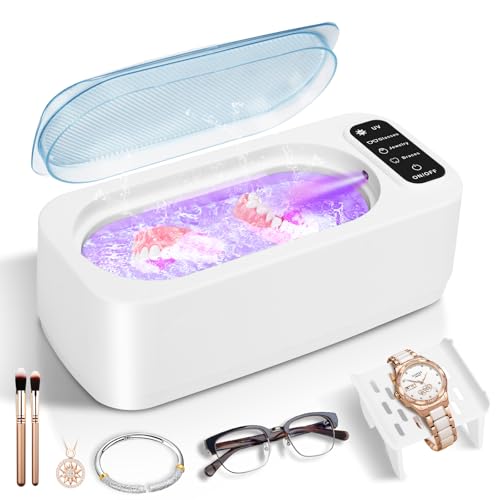
As an Amazon Associate, I earn from qualifying purchases
In a world where precision cleaning matters — from jewelry to medical instruments and delicate electronics — few tools match the efficiency of an ultrasonic cleaner. This remarkable device uses high-frequency sound waves to clean surfaces at a microscopic level, eliminating dirt, grease, and contaminants that traditional cleaning methods often miss.
Whether you’re a jeweler restoring sparkle to precious stones, a mechanic maintaining intricate engine parts, or simply someone who values spotless eyewear, an ultrasonic cleaner can transform how you handle cleaning tasks.
However, the market offers a wide range of models, from compact tabletop cleaners for small household items to heavy-duty industrial units. Understanding how these devices work and which specifications truly matter will help you make a wise and long-lasting investment.
This buying guideline for ultrasonic cleaners will walk you through everything you need to know — from how they operate, what features to look for, the pros and cons, and expert insights that ensure you pick the right model for your needs.
How Ultrasonic Cleaning Works
At its core, ultrasonic cleaning is based on a simple but powerful principle: sound-induced cavitation.
When you turn on an ultrasonic cleaner, it sends high-frequency sound waves (typically 20–40 kHz) through a cleaning solution. These waves create microscopic bubbles that rapidly collapse, producing tiny but powerful shockwaves. This process — known as cavitation — dislodges dirt, grease, and other contaminants from even the most intricate surfaces.
Because the bubbles are so small, ultrasonic cleaning can reach crevices, hinges, engravings, and tight joints that manual scrubbing or brushing could never access.
Typical cleaning applications include:
- Jewelry, watches, and glasses
- Dental and surgical instruments
- Electronic components and circuit boards
- Automotive carburetors and injectors
- Lab instruments and tools
- Coins, collectibles, and metal parts
This technology offers precision, speed, and non-abrasive cleaning, making it ideal for items that are fragile or detailed.
What to Consider Before Buying an Ultrasonic Cleaner
Choosing the right ultrasonic cleaner depends on more than just size or appearance. Each model varies in capacity, frequency, power output, and additional features — all of which affect cleaning performance.
Here are the essential factors to evaluate before buying:
1. Tank Capacity and Size
The tank size determines what items you can clean and how many at once.
- Small units (0.5–1.5 liters): Perfect for jewelry, glasses, or dental tools.
- Medium units (2–6 liters): Ideal for larger tools, mechanical parts, and lab equipment.
- Large units (10+ liters): Designed for industrial, automotive, or workshop use.
When choosing, make sure the items fit comfortably without touching the tank walls, which could reduce cleaning efficiency or cause surface damage.
Tip: Always measure your largest commonly cleaned item before purchasing.
2. Ultrasonic Frequency
Frequency affects how aggressively the cleaner operates.
| Frequency Range | Best For | Cleaning Strength |
|---|---|---|
| 20–28 kHz | Heavy-duty parts, carburetors, metal tools | Strong, intense cavitation |
| 35–45 kHz | General-purpose cleaning (jewelry, instruments) | Balanced cleaning |
| 68–130 kHz | Delicate items (electronics, lenses, medical tools) | Gentle but thorough |
Lower frequencies produce larger cavitation bubbles that deliver stronger cleaning action, while higher frequencies create smaller bubbles for more delicate precision cleaning.
3. Power and Efficiency
The ultrasonic power, measured in watts, dictates how effectively the sound waves generate cavitation.
A good rule of thumb is 10–15 watts per liter of tank volume. Too low, and cleaning will be weak; too high, and you may risk damaging delicate items.
Some models also include variable power control, allowing you to adjust intensity for different materials — a valuable feature for mixed-use cleaning.
4. Heating Function
Heat enhances the cleaning process by loosening oils and grime.
Most quality ultrasonic cleaners include adjustable temperature control (usually between 30°C and 80°C). The combination of warm solution and ultrasonic waves significantly improves efficiency.
However, avoid excessive heat for delicate materials like plastic, certain gemstones, or electronics.
Ideal temperature range:
- Jewelry and glasses: 40–50°C
- Engine parts: 50–65°C
- Medical instruments: 60–70°C
5. Cleaning Solution Compatibility
Ultrasonic cleaners require a specialized cleaning solution (not just water).
There are three main types:
- General-purpose detergents: For everyday items and jewelry.
- Degreasing solutions: For automotive or mechanical parts.
- Specialized formulations: For electronics, optics, or metals.
Avoid harsh chemicals like bleach or flammable solvents. The right solution protects both your items and the cleaner’s internal components.
6. Timer and Control Panel
Timers allow precise cleaning cycles — typically between 1 to 30 minutes.
Digital panels with LED displays are user-friendly and offer consistent performance. Mechanical dials are simple but less precise.
If you clean different materials, look for a model with programmable settings or automatic shutoff to avoid overexposure.
7. Build Quality and Material
Durability matters, especially if you plan regular or industrial use.
Opt for models made of stainless steel tanks and exteriors, which resist corrosion and extend longevity. Avoid plastic tanks for heavy use, as they degrade over time under ultrasonic vibrations.
Check for:
- Reinforced welding (no leaks or cracks)
- Non-slip base for stability
- Sturdy lid to prevent splashing
8. Drainage and Maintenance
For larger cleaners, a built-in drain valve is invaluable. It simplifies emptying the tank and reduces spills.
Regular maintenance is easy:
- Change solution after each heavy cleaning session.
- Rinse the tank thoroughly with clean water.
- Dry completely before storage.
Simple care keeps your device efficient and hygienic for years.
9. Noise and Vibration Levels
Ultrasonic cleaners naturally emit a faint buzzing sound, but high-quality models minimize noise through insulation and stable bases.
If you plan to use the device frequently or in shared spaces, choose a quiet design rated for low decibel output.
10. Safety Features
For safe home or lab use, ensure the device includes:
- Automatic shutoff (prevents overheating)
- Temperature limiters
- Fuse protection
- Non-slip feet
These features protect both the device and the user, especially during longer cycles.
Product Summary Table
| Feature | Recommended Specification |
|---|---|
| Tank Material | Stainless Steel |
| Tank Capacity | 2–6 Liters for general use |
| Frequency Range | 35–45 kHz |
| Heating Range | 30–80°C Adjustable |
| Power Output | 10–15 Watts per Liter |
| Timer Control | Digital (1–30 minutes) |
| Drain Valve | Yes, for 3L+ models |
| Safety | Auto shutoff & fuse protection |
Pros and Cons of Ultrasonic Cleaners
Pros
- Deep, uniform cleaning that reaches hidden crevices.
- Non-abrasive process — safe for delicate items.
- Time-saving: cleans in minutes, not hours.
- Eco-friendly: requires minimal chemicals and water.
- Versatile: suitable for multiple materials and industries.
- Low maintenance: simple operation and easy upkeep.
Cons
- Initial cost: higher than manual cleaners.
- Requires correct solution: not all liquids are suitable.
- Can damage fragile materials (e.g., soft stones) if used incorrectly.
- Noise during operation: noticeable buzzing in small spaces.
- Limited tank capacity for large or irregularly shaped items.
Who It’s Best For
| User Type | Why It’s Ideal |
|---|---|
| Jewelry Enthusiasts | Restores shine without manual scrubbing. |
| Mechanics and Engineers | Removes grease and carbon buildup from parts. |
| Laboratories and Clinics | Ensures sterile and residue-free tools. |
| Collectors | Safely cleans coins, watches, and antiques. |
| Home Users | Maintains eyeglasses, razors, and dental appliances. |
Ultrasonic cleaners cater to anyone who values precision cleaning — whether for professional, industrial, or household use.
Expert Insights and Real-World Use
According to cleaning technology specialists, the most common mistake users make is overfilling the tank or using tap water alone. Both reduce efficiency. Instead, experts recommend:
- Maintaining a consistent solution-to-item ratio (leave some space above liquid level).
- Using filtered water with proper detergent to prevent mineral deposits.
- Avoiding the stacking of items; each should have direct exposure to sound waves.
- Running a “degassing cycle” — operating the cleaner for 5 minutes before inserting items to remove air bubbles.
Personal experiences from technicians and hobbyists reveal that an ultrasonic cleaner saves up to 70% of manual cleaning time, and many users find it extends the life of their equipment through gentle, thorough maintenance.
Comparison: Ultrasonic Cleaning vs. Traditional Cleaning
| Aspect | Ultrasonic Cleaning | Manual / Traditional Cleaning |
|---|---|---|
| Cleaning Depth | Reaches microscopic crevices | Surface-level only |
| Speed | 3–10 minutes | Often 30+ minutes |
| Chemical Use | Minimal detergent | Harsh solvents or abrasives |
| Material Safety | Non-abrasive | Risk of scratching or wear |
| Consistency | Uniform results every time | Dependent on manual effort |
| Labor Intensity | Hands-free operation | Requires scrubbing |
| Cost Over Time | Economical (reusable) | Recurrent cleaning products |
Verdict: Ultrasonic cleaning clearly outperforms manual methods in precision, safety, and consistency — making it ideal for valuable or complex items.
Myths and Facts About Ultrasonic Cleaners
| Myth | Fact |
|---|---|
| Any liquid works in ultrasonic cleaning. | Only compatible solutions or mild detergents should be used. |
| Ultrasonic cleaners are only for jewelry. | They clean hundreds of items, from tools to circuit boards. |
| The higher the power, the better. | Excessive power can damage delicate materials. |
| Cleaning is instant. | Most cycles take 3–10 minutes depending on grime. |
| Noise means malfunction. | A light buzzing sound is normal during operation. |
Care and Maintenance Tips
Keeping your ultrasonic cleaner in optimal condition is simple:
- Empty and rinse the tank after use.
- Wipe with a soft cloth to prevent residue buildup.
- Use distilled or filtered water to avoid scaling.
- Check the transducers periodically for alignment or looseness.
- Avoid running without liquid — this can permanently damage the device.
- Store in a dry, cool place with the lid closed to prevent dust entry.
Proper care ensures years of consistent, powerful performance.
Safety Precautions
Although user-friendly, ultrasonic cleaners require responsible handling:
- Never immerse body parts in the tank during operation.
- Avoid cleaning flammable or volatile liquids.
- Do not place sealed containers inside the tank.
- Ensure proper grounding of the electrical outlet.
- Allow the tank to cool between extended cleaning sessions.
Following these precautions guarantees both safety and device longevity.
Frequently Asked Questions (FAQs)
1. Can I use regular tap water?
Yes, but results improve significantly when using distilled water with a mild detergent.
2. How long should a cleaning cycle last?
Most items clean effectively within 5–10 minutes. Stubborn dirt may need longer.
3. Can it damage delicate items like gemstones or lenses?
Use higher frequencies (above 45 kHz) and mild solutions to protect fragile materials.
4. Does it clean rust?
Ultrasonic cleaners can remove surface rust with proper cleaning agents but won’t fix deep corrosion.
5. Is heating always necessary?
Heat improves cleaning but is optional for heat-sensitive items like electronics.
6. Can I clean electronics safely?
Yes — only if the parts are water-resistant or detached from power sources. Dry thoroughly afterward.
7. How often should I replace the cleaning solution?
After each heavy-use session or when visibly dirty. Fresh solution maintains effectiveness.
8. Are they expensive to run?
No. Energy consumption is minimal, often under 100 watts per cycle for household units.
Real-Life Scenarios: How People Use Ultrasonic Cleaners
- Jewelry Restoration: Professionals use ultrasonic cleaners daily to revive dulled diamonds and gold without abrasion.
- Automotive Maintenance: Mechanics rely on large units to degrease carburetors and fuel injectors efficiently.
- Dental Offices: Sterilizing delicate instruments between patients ensures hygiene and longevity.
- Watch Collectors: Cleans microscopic dust and oil from gears without disassembly.
- Home Users: Maintain razors, eyeglasses, or metal tools for everyday use.
These real-life applications highlight the versatility and efficiency of ultrasonic cleaning across various domains.
Pros and Cons Recap
| Aspect | Pros | Cons |
|---|---|---|
| Cleaning Performance | Deep, precise, consistent | May damage fragile materials if misused |
| Speed | Fast operation | Limited by tank size |
| Ease of Use | Simple, automated | Requires learning correct settings |
| Cost | Long-term savings | Higher upfront investment |
| Versatility | Cleans wide range of materials | Needs specific cleaning fluids |
Final Recommendation
If you’re seeking a reliable, efficient, and non-abrasive cleaning method for precision items, an ultrasonic cleaner is a worthwhile investment.
It combines technology and simplicity — using sound waves to achieve what brushes and chemicals cannot. Whether you want to restore jewelry’s shine, maintain delicate instruments, or clean mechanical parts with accuracy, this device delivers professional-level results right at home or in the workshop.
When purchasing, prioritize:
- Stainless steel build quality for durability.
- Appropriate frequency for your target items.
- Heating and timer control for convenience.
- Certified safety features for peace of mind.
A well-chosen ultrasonic cleaner will serve you for years, saving time, effort, and money while ensuring every item you clean comes out spotless — inside and out.
Invest once, clean forever.

Latest Post
- Right Choices: Everyday Buying Guide
 PHI VILLA Garden Chairs Set of 2, Patio Chairs Stackable Outdoor Dining Chairs High Back, Textilene Fabric and E-Coating Metal Frame for Backyard Porch Poolside PHI VILLA Garden Table for 4, Square Metal Outdoor Dining Table with Carbon Crystal Tabletop and Marble Texture, E-Coating Patio Table for Backyard Porch Poolside, 94 x 94 x 74cm… Read more: Right Choices: Everyday Buying Guide
 - Best Buys: Everyday Essentials Guide
 OBEST Action Camera, 1080p Mini Thumb Action Camera,360° Body Camera Magnetic Pocket Body Cam, 128GB Card, Ip68 Waterproof, Mini Body Camera for Motorcycle, Bike, Work, Travel Mini Projector HD 1080P 4K Supported Smart Projectors Auto Keystone & Focus 22000 Lumen 260 ANSI Bightness WIFI 6 and Bluetooth Home Theatre 200″ w 270°Rotatable Stand for Game/Bedroom/Outdoor/Phone… Read more: Best Buys: Everyday Essentials Guide
 - Tap Smart: Ultimate Tablet Buying Guide
 DOOGEE Tab E3 Max 14 Inch Tablet Android 15 Gaming Tablet 13500mAh Large Battery MTK G100 Octa-Core 32GB RAM+256GB ROM (2TB TF), 2.1K (2160 * 1440) Display 16MP+2MP+8MP 4G LTE/5G WLAN/GPS/GMS – Blue DOOGEE U10 Android 16 Tablets, 10 Inch HD+ IPS Tablet, 16GB RAM+128GB ROM+2TB AI Tablet, 5060mAh Android Tablets, 8MP+5MP Cameras, Gemini AI/Widevine… Read more: Tap Smart: Ultimate Tablet Buying Guide
 - Find Your Perfect Smartphone
 DOOGEE Blade 10 Power Rugged Smartphone, Android 16 Rugged Phone With 10300mAh&18W Flash Charging, 24GB+256GB/2TB, Octa Core, 50MP Camera, 6.6″ HD+ 90Hz, 3 Cards Slots, Fingerprint, Face ID, NFC, GPS DOOGEE Blade10 Max Rugged Smartphone, 10300mAh Battery, 1.54” Touch Back Screen, 20GB RAM 256GB ROM, 6.56″ 90Hz FHD+ Display, IP69K Waterproof, 4G Dual SIM, 3… Read more: Find Your Perfect Smartphone
 - Smart Picks: Daily Use Buying Guide
 Trsaow Electric Fence Energiser 12V 2J, 10 km Range,IP44 Electric fence posts, Electric Fence Tester Insulators, Weatherproof Kit for Horses, Cattle, Pigs, Goats, 2J Output, 3 Ways to Power Hair Dryer High Speed for Women,2000W Professional Blow Dryer, Fast Drying Negative Ion Hairdryer Blowdrye, 3 Heat Settings & Speed, 1 Diffuser & 1 Nozzle for… Read more: Smart Picks: Daily Use Buying Guide
 - Easy Guide to the Best Tablets
 DOOGEE Tab A9 Pro Android 16 Tablet with Keyboard, Gemini AI 20GB RAM+128GB(2TB) ROM Unisoc T310 10 inch Tablets 6580mAh Battery AI Camera|5G WiFi|Bluetooth|Face ID|3.5mm Gaming Tablet with Pen Black DOOGEE T10W Android 15 Tablets 2025, 10 inch Tablet with SIM Card Slots, 16GB RAM+128GB ROM/2TB, Android Tablets, 8000mAh, Tablet with Keyboard/Pen/Mouse/Case, 4G LTE/Widevine L1/Face… Read more: Easy Guide to the Best Tablets
 - Sleep Better: Mattress Buying Guide
 Inofia Double Mattresses 4FT6,30CM Memory foam Pocket Sprung Hybrid Mattress,Orthopaedic Pressure Relief & Motion Isolation,Medium Firm,Mattress in a Box Resspry Small Double Size Mattress,12 Inch Memory Foam Sprung Mattress 4FT for Pressure Relief and Cool Sleep, Supportive Medium Firm Hybrid Mattress,The Nocturne Collection(120×190×30cm) I may earn a small commission when you shop through my links,… Read more: Sleep Better: Mattress Buying Guide
 - Find Your Perfect Tablet Today
 POCKAM P10 Kid Kids Tablet, 32GB RAM + 64GB ROM, 90Hz Android 16 Tablet with Gemini AI, Quad-Core T310, 10.1” IPS HD Screen, 7000mAh, 5G WIFI, 10 inch Talet with Stylus Pen, Silicone Case-Blue DOOGEE TAB G6 PRO Android 16 Tablet 12 Inch Android Tablets, 2.4K 90Hz, 36GB+128GB/2TB Tablet with Sim Card Slot, 9000mAh,Helio G100… Read more: Find Your Perfect Tablet Today
 - Tablet Picks: Smart Buying GuideDOOGEE TAB A9+ 2025 Newest 11 Inch Android 15 Tablet, 8580mAh Tablet With Keyboard, T7200 Octa Core Android Tablets, 20GB + 64GB/2TB Tablets With Pen, 13+5MP, 2 Speakers + Widevine L1, Mouse & Case DOOGEE TAB A9+ 2025 Newest 11 Inch Android 15 Tablet, 8580mAh Tablet With Keyboard, T7200 Octa Core Android Tablets, 20GB +… Read more: Tablet Picks: Smart Buying Guide
- Tap Smart: Ultimate Tablet Buying Guide
 Introduction Tablets have become one of the most versatile digital devices in modern life. They combine the portability of a smartphone with the functionality of a laptop, making them ideal for entertainment, productivity, learning, creativity, and communication. Whether you want a device for streaming movies, attending online classes, reading digital books, sketching artwork, or handling… Read more: Tap Smart: Ultimate Tablet Buying Guide
 - Tablet Buying Made Easy
 Aorlym P10 Android 16 Tablet, 10 Inch Tablet, 48GB RAM+128GB ROM/2TB TF, Gemini AI, 90Hz Display, 7000mAh, 5W OTG, 5G WiFi, Face ID, OTG, GPS, 3.5mm Jack, Widevine L1, Tablet with keyboard DOOGEE TAB A9+ 2025 Newest Android 16 Tablet with Gemini AI, 11 Inch 8580mAh Tablet With Keyboard, T7200 Octa Core Android Tablets, 20GB+64GB… Read more: Tablet Buying Made Easy
 - Smart Choices: Everyday Essentials Buying Guide –AMZCHEF Coffee Machine 20 Bar, 1350W Espresso Machine, Compact Stainless Steel Coffee Machines with LED Touch Screen, Powerful Steam Wand, Removable Water Tank AMZCHEF Burr Coffee Grinder, Coffee Grinders Electric with 45 Precise Grind Settings, Adjustable Portafilter Holder & LED Touchscreen – Anti-Static, Easy Clean AMZCHEF Cold Press Juicer Machines, 3-IN-1 Masticating Juicer with 2… Read more: Smart Choices: Everyday Essentials Buying Guide –
- Smart Choices: Everyday Essentials Buying GuideOBEST Action Camera 1080P HD, Mini Body Cam 120° Wide Angle, Sport Camera Night Vision Infrared, 0.85inch Screen 10+ Multi-function Accessories for Cycling/Vlogging/Skiing/Surfing (No SD Card) Mitclear Heavy Duty Wire Broom with Telescopic Handle(57IN), Stiff Metal Bristle Brush for Removing Weed Moss Algae, Outdoor Floor Scrub Brush for Patio, Deck, Garden Kids Metal Detector, Potuem… Read more: Smart Choices: Everyday Essentials Buying Guide
- Smart Picks: Mobile Phone Buying GuideOSCAL Mobile Phones 5G, Tiger 8 Smartphone Android 15 (2026), NFC Android Phone, 120Hz, 12GB+128GB/2TB TF Octa Core, 6.88”HD, 5000mAh Dual SIM Unlocked, 16MP Camera (10X), Fingerprint/FaceID, Black OSCAL Marine3 Slim & Portable Rugged Smartphone (2026-3YRW),32G RAM +128GB/2TB Rugged Phone, NFC, Android 16 Phone, Doke AI &OS 5, IP69K Protection,6.56″ HD,90HZ,16MP Night, Dual SIM/1TF Slots,… Read more: Smart Picks: Mobile Phone Buying Guide
- Shuffle Like a Pro: Your Ultimate Card Shuffler Buying GuideCard Shuffler Machine, 3000mAh Automatic Card Shuffler with USB Charging Cable, Two-deck Card Shuffling Machine, Low Noise Card Shufflers suitable for UNO, Poker, Texas Hold’em and blackjack As an Amazon Associate, I earn from qualifying purchases Whether you’re a casual card player or host weekly poker nights, shuffling can quickly become tedious—especially when playing multiple… Read more: Shuffle Like a Pro: Your Ultimate Card Shuffler Buying Guide