
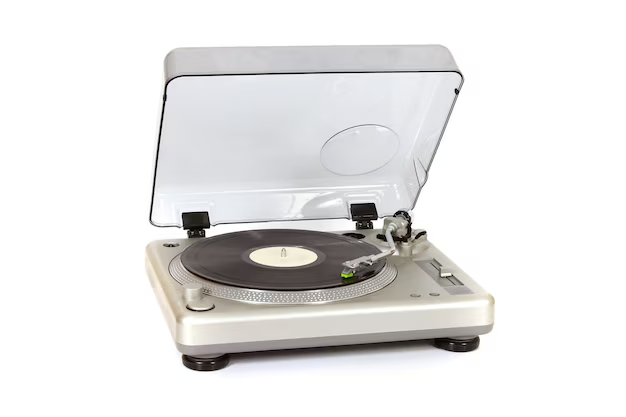
Vinyl records are making a strong comeback, and with them, the timeless beauty of record players. For music lovers, record players offer a warm, authentic sound that digital formats simply can’t replicate. Whether you’re starting your vinyl journey or upgrading your setup, choosing the right record player can feel overwhelming.
Do you go manual or automatic? Belt-drive or direct-drive? Do you need built-in speakers or external connections? Each feature impacts how you’ll experience your favorite albums.
This buying guideline will help you navigate the world of record players with confidence—covering key considerations, product types, pros and cons, and expert insights so you can find the perfect turntable for your lifestyle and budget.
Devices | Features | Price |
|---|---|---|
Record Player | 3-Speed Vintage |
What to Consider Before Buying a Record Player
Before investing in a record player, think about how you’ll use it and what matters most to you. Here are the essential factors:
1. Drive Type
- Belt-Drive: The platter is rotated by an elastic belt attached to the motor. Known for reduced vibrations and high-quality sound.
- Direct-Drive: Motor is directly connected to the platter. Offers faster start-up and durability, often preferred by DJs.
2. Manual vs Automatic
- Manual: You place and remove the tonearm yourself. Offers more control and often appeals to purists.
- Automatic: The tonearm moves into place and lifts off automatically. Great for convenience.
- Semi-Automatic: Combination of both; you place the tonearm, but it lifts at the end of play.
3. Built-in Features
- Speakers: Some models include built-in speakers for portability and simplicity, though external speakers usually sound better.
- Preamp: Converts phono signal to line level, allowing you to connect to modern sound systems.
- USB Connectivity: Lets you digitize vinyl into digital files.
4. Sound Quality
Pay attention to:
- Cartridge quality (affects tone and clarity).
- Anti-vibration design (reduces skipping).
- Speed options (33 ⅓, 45, 78 RPM for different record types).
5. Aesthetic and Build
Record players double as décor pieces. From sleek modern designs to vintage-inspired wood finishes, your choice can reflect both style and function.
6. Budget
- Entry-level: Basic models with easy setup and built-in features.
- Mid-range: Better sound quality, upgradeable parts, improved durability.
- High-end: Precision engineering, audiophile-grade sound, premium materials.
Product Summary: Types of Record Players
| Type | Best For | Pros | Cons |
|---|---|---|---|
| Belt-Drive | Home listening, audiophiles | Great sound quality, low vibration | Slower start-up, belts may wear |
| Direct-Drive | DJs, frequent users | Durable, instant speed control | More vibrations, slightly noisier |
| Manual | Purists, vinyl enthusiasts | More control, traditional feel | Less convenient |
| Automatic | Casual listeners | Easy to use, beginner-friendly | Less hands-on control |
| Portable Record Players | Small spaces, beginners | Built-in speakers, lightweight | Limited sound quality |
| USB Record Players | Digitizing collections | Record-to-digital conversion | May compromise analog sound |
Pros & Cons of Record Players
Pros
✅ Authentic, warm vinyl sound
✅ Wide range of styles and features
✅ Vinyl experience creates nostalgic connection
✅ Many upgrade options (cartridges, speakers, preamps)
✅ Vinyl records hold or increase value over time
Cons
❌ Can be more expensive than digital players
❌ Requires maintenance (stylus, belts, cleaning)
❌ Vinyl records are bulkier and more delicate
❌ Built-in speakers often lack depth
❌ Not as portable as digital options
Who Record Players Are Best For
- Casual Listeners: Portable, automatic options are perfect for simple enjoyment.
- Collectors: Belt-drive or manual turntables provide the truest vinyl experience.
- Audiophiles: High-end models with upgradeable cartridges and anti-vibration features.
- DJs: Direct-drive turntables with pitch control and durability.
- Modern Users: USB record players for digitizing music collections.
Real Insights & Expert Opinions
- Audiophile feedback: Many enthusiasts agree that belt-drive models offer warmer tones, while direct-drive provides precision.
- Personal experience: Beginners often prefer automatic setups, avoiding the learning curve of handling tonearms manually.
- Expert tip: “Invest in a good pair of external speakers or headphones. Even the best record player won’t shine with poor output.”
FAQs About Record Players
Q1: Can I connect a record player to modern speakers?
Yes, but you may need a phono preamp if it isn’t built-in.
Q2: Do all record players play 78 RPM records?
No, many modern players only support 33 ⅓ and 45 RPM. Check speed options before buying.
Q3: How long does a stylus last?
On average, between 500–1,000 hours of playtime, depending on care and record cleanliness.
Q4: Are USB record players good for sound quality?
They’re practical for digitizing vinyl, but purists may notice slight compromises compared to analog-focused models.
Q5: What’s the main difference between cheap and expensive models?
Higher-end models offer better build quality, reduced vibration, clearer sound, and upgradeable parts.
Final Recommendation
A record player isn’t just a piece of audio equipment—it’s an experience. Choosing the right one depends on how you plan to use it:
- For beginners: Automatic, portable models with built-in speakers offer simplicity.
- For vinyl enthusiasts: Belt-drive, manual options give authentic sound quality.
- For DJs: Direct-drive turntables provide reliability and speed control.
- For digital users: USB-enabled players let you preserve your collection.
By balancing budget, features, and sound quality, you can find a record player that matches your lifestyle. Whether you’re spinning vintage classics or exploring new vinyl releases, the right player will transform listening into an immersive, timeless ritual.